When to use this guide
Use it when pinholes, craters or blisters appear on galvanised steel, castings or other porous substrates, or before quoting such parts.
What you need
- Representative galvanised or cast parts
- Your pretreatment and oven profile
- A film thickness gauge
Steps
Confirm the defect is outgassing
Pinholes or blisters that appear on porous or galvanised areas after cure, not on adjacent steel, point to gas leaving the substrate.
Check pretreatment and drying
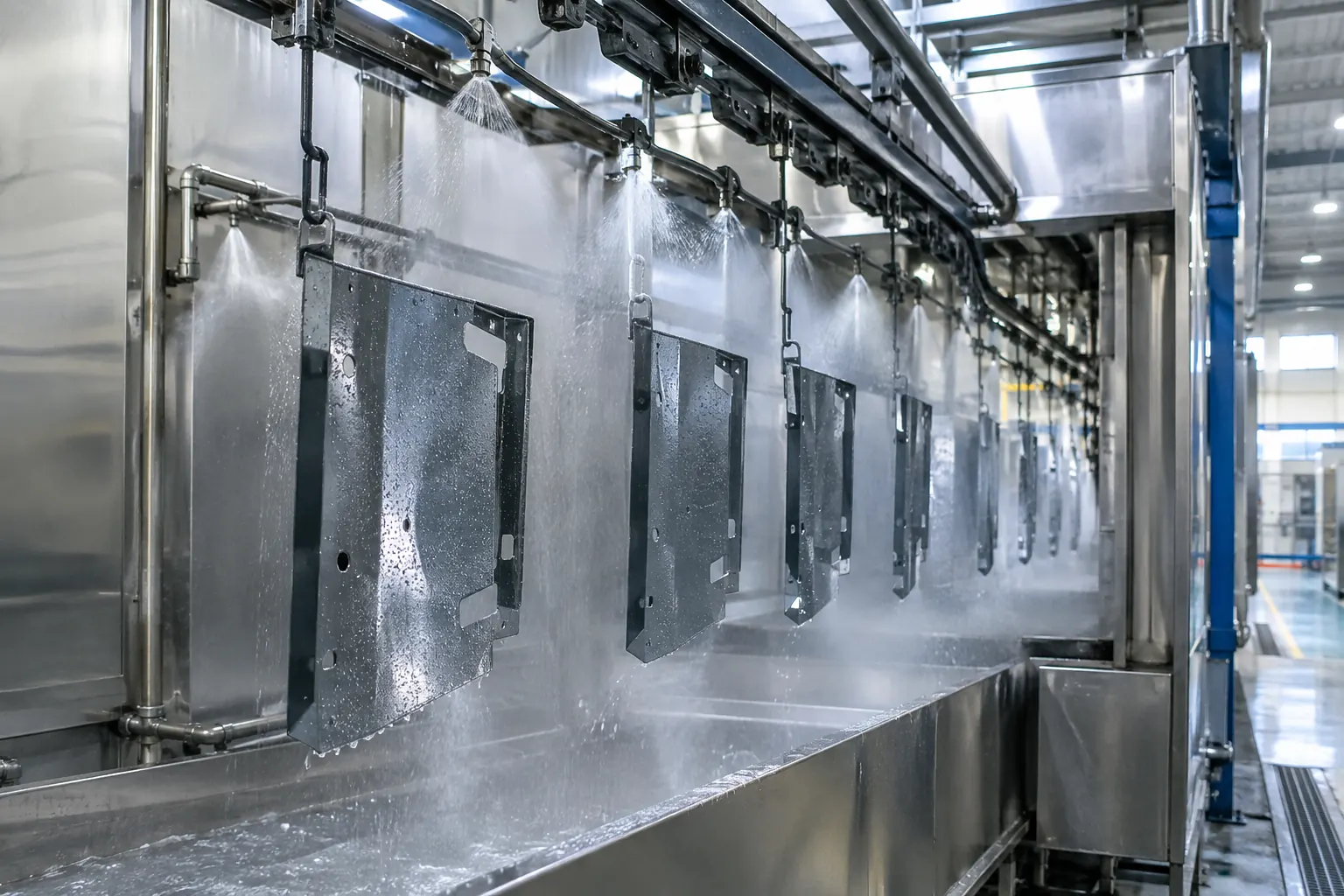
Degreasing, rinsing and drying before the booth must be complete; trapped moisture behaves like outgassing.
Add a degassing preheat
Heat the bare parts before coating so gas escapes before the powder is applied.
Keep film within range
Very thick films trap gas on castings and galvanised parts. Stay within the recommended 80–120 µm where the specification allows.
Ask for an outgassing-forgiving grade
Tell WANAN the substrate and defect; the technical team can propose a suitable grade for a trial.
Verify on a trial run
Coat a batch of real parts and inspect them before changing the production settings.
Key values
| Item | Value | Source |
|---|---|---|
| Recommended film | 80–120 µm | Series TDS |
| Cure | 190–200 °C object temperature, 10–15 min | Series TDS |
| Remedies | Degassing preheat or outgassing-forgiving grade | Powder coating 101 |
Common mistakes
- Building extra film to hide pinholes, which traps more gas
- Skipping the drying step after pretreatment
- Changing several variables at once during troubleshooting
Related
- Powder coating 101: pretreatment
- How to measure film thickness
- Ask the technical team
- All how-to guides
Published 7 October 2026 by the WANAN technical team. Figures are taken from WANAN technical data sheets and the pages linked above.