When to use this guide
Use it when comparing WANAN series with each other or with an incumbent powder, and when translating a customer specification into a series choice.
What you need
- The TDS of each series you are comparing (download from the resources page)
- Your specification, with its test methods
Steps
Check the substrate and cure behind the values
WANAN values are generated on phosphated steel panels cured at 190–200 °C object temperature for 10–15 min, at 80–120 µm.
Read the corrosion values
Neutral salt spray, ISO 9227: hours to the agreed corrosion criterion on scribed panels. Humidity, ISO 6270-1: hours in condensation without blistering or adhesion loss.
Read the weathering value
Xenon-arc, ISO 16474-2: hours of accelerated exposure, with gloss and colour change evaluated.
Read the mechanical values
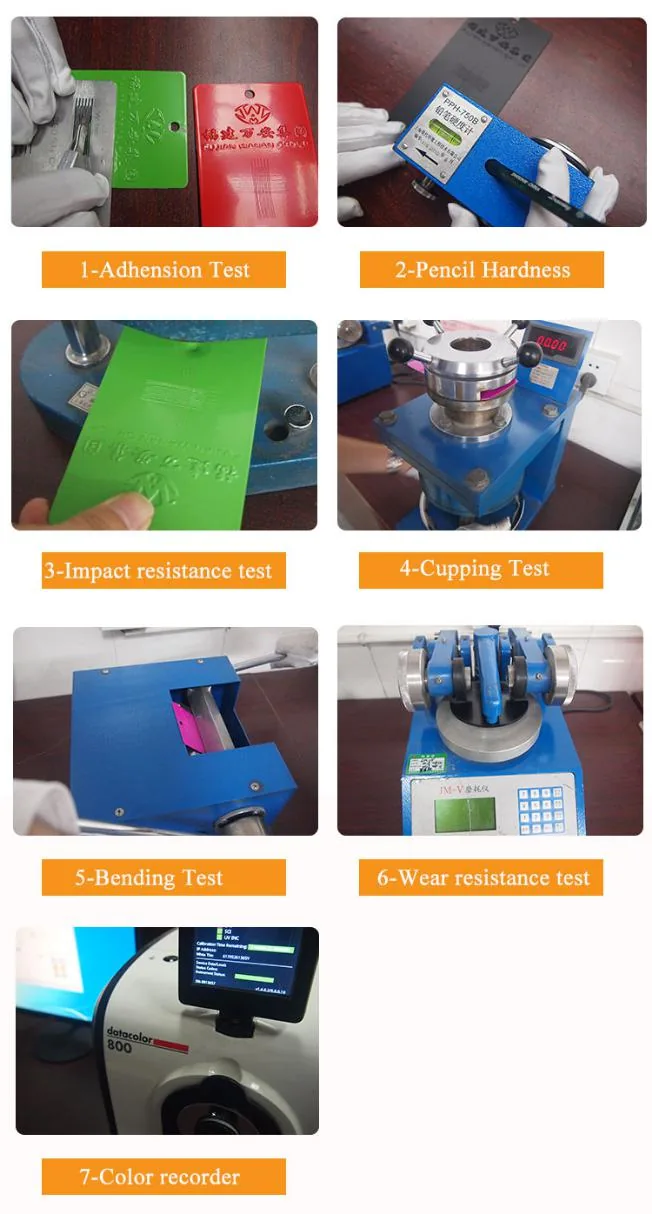
Impact ISO 6272-2, bend ISO 1519, cross-cut ISO 2409 and pencil hardness ISO 15184 describe the cured film.
Compare like with like
Compare only values measured by the same method. Series names are designations, not hour counts, and primer and topcoat values are never added.
Key values
| Item | Value | Source |
|---|---|---|
| Salt spray | ISO 9227 | TDS |
| Humidity | ISO 6270-1 | TDS |
| Xenon-arc | ISO 16474-2 | TDS |
| Impact / bend / cross-cut / hardness | ISO 6272-2 / ISO 1519 / ISO 2409 / ISO 15184 | TDS |
| Gloss | ISO 2813 at 60°, agreed per project | Colours |
Common mistakes
- Reading salt spray hours as years of service life
- Comparing values from different test methods
- Assuming P1680 means 1680 h salt spray (it is 1000 h)
- Ignoring the substrate and pretreatment the values were measured on
Related
Published 7 October 2026 by the WANAN technical team. Figures are taken from WANAN technical data sheets and the pages linked above.